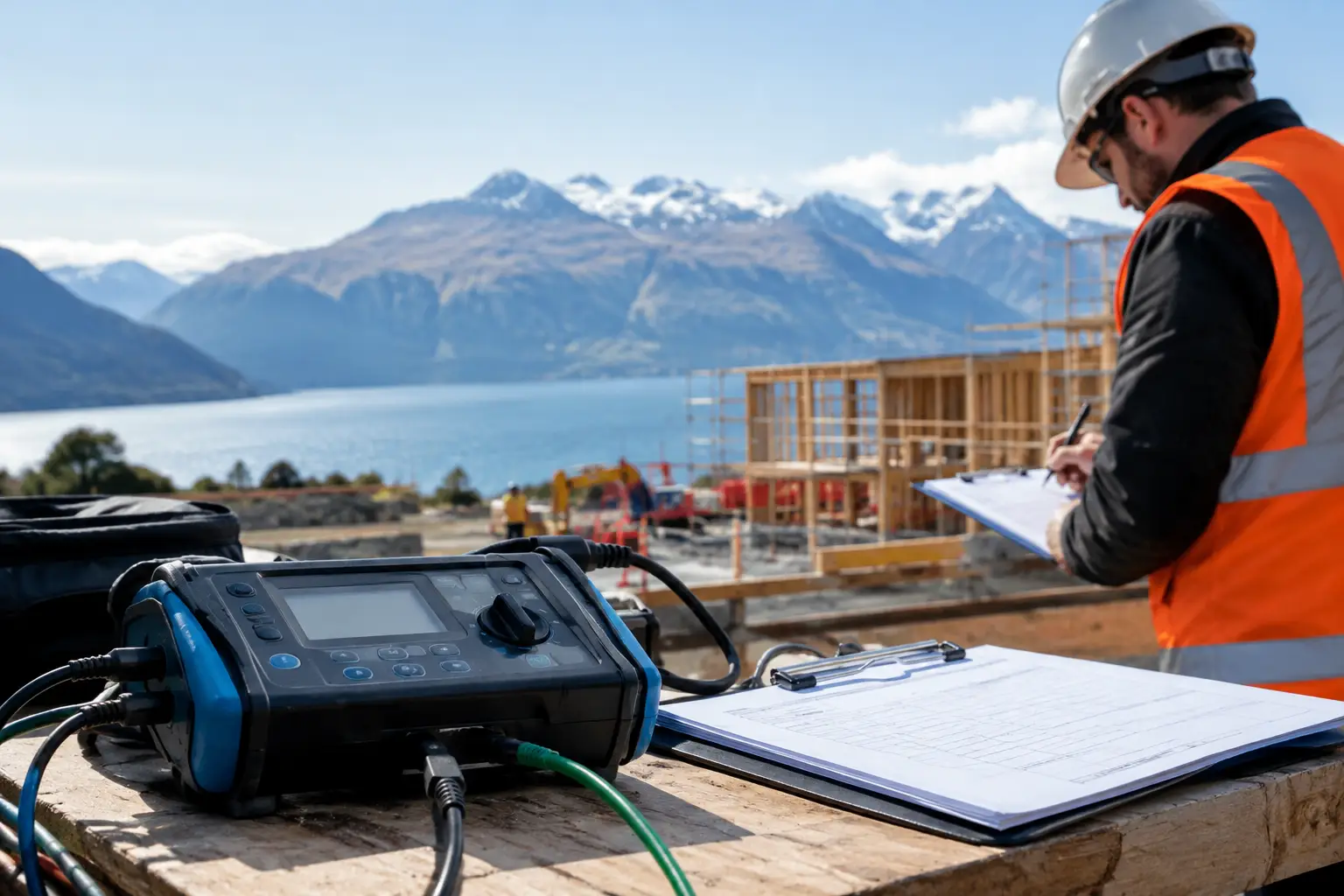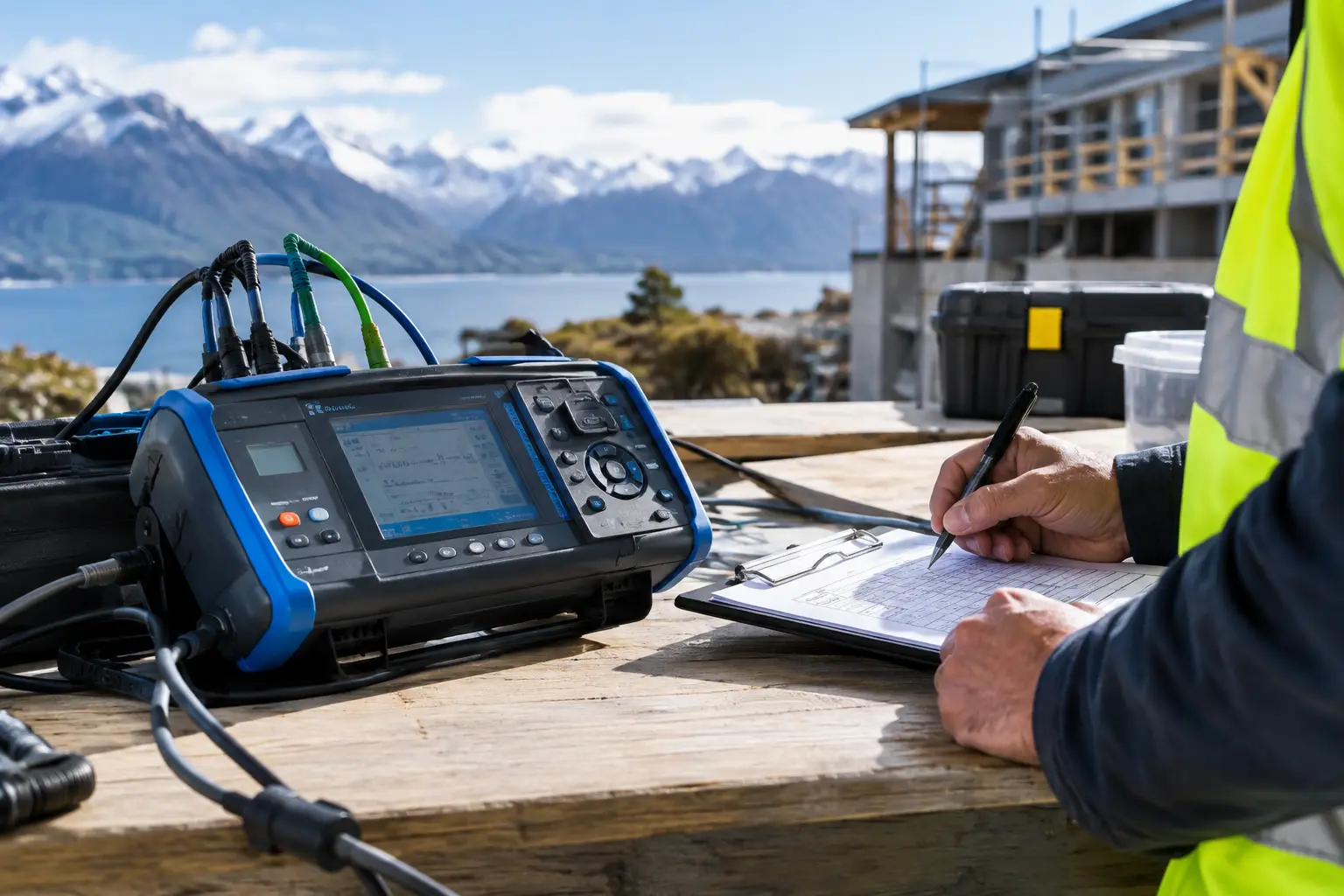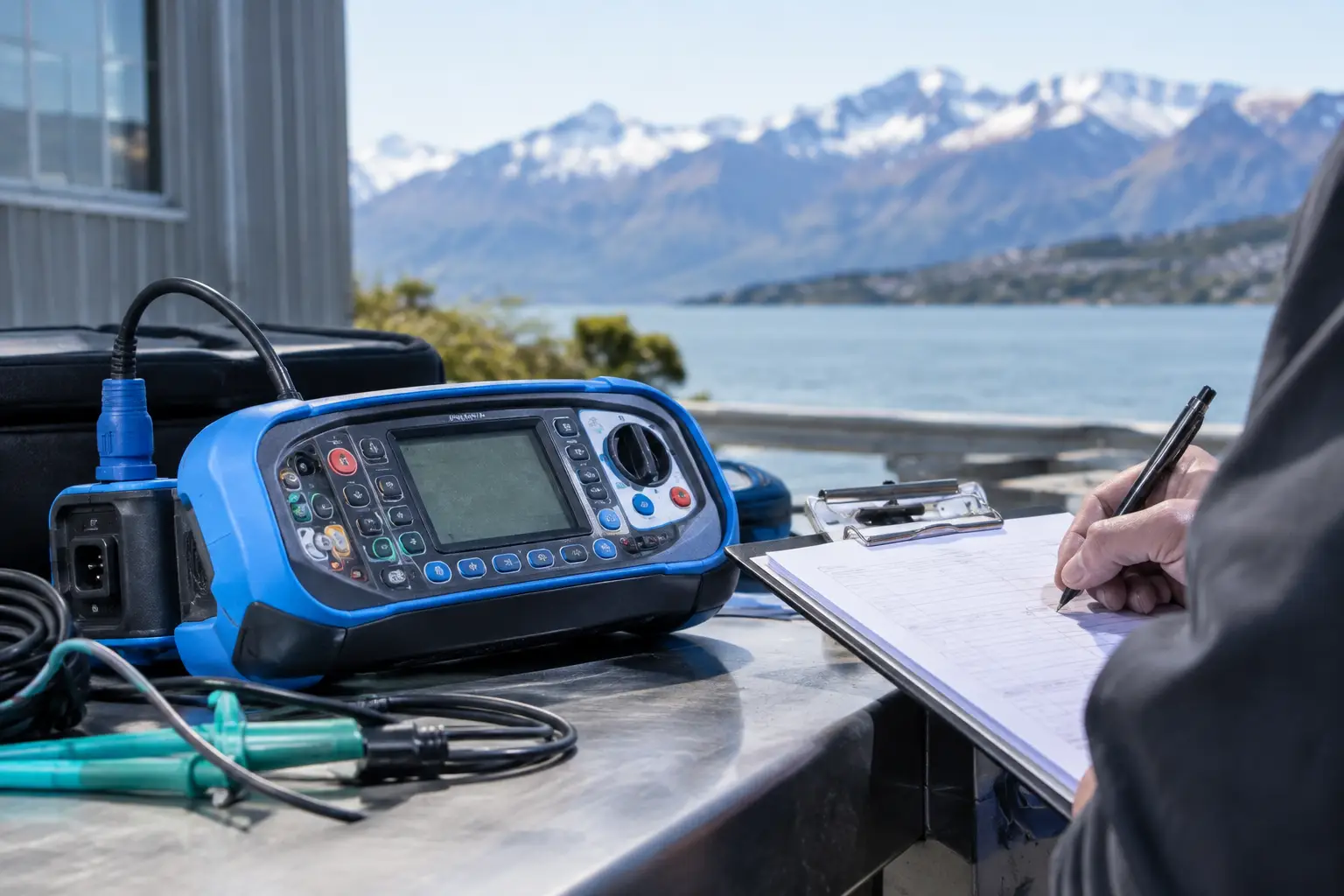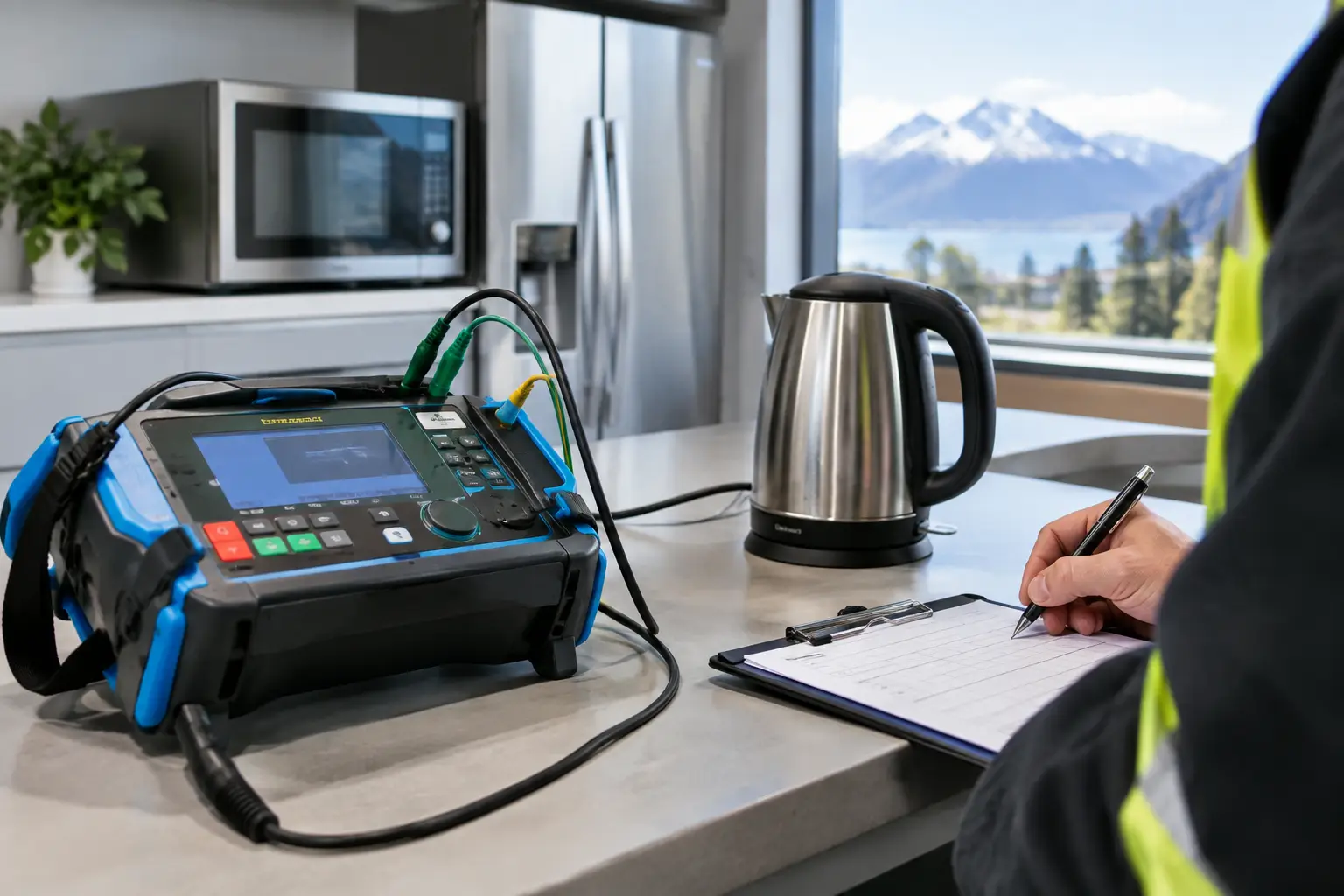
A damaged extension lead tucked behind a bench, a drill with a cracked casing or a grinder that has missed its retest date can become a serious site risk quickly. Knowing how to audit portable tools gives your business a practical way to find these issues early, keep equipment under control and show that electrical safety is being actively managed.
For a construction site, workshop, warehouse or office, a useful audit is more than a walk-through looking for tags. It combines a current asset register, visual inspections, appropriate electrical testing, clear decisions about faulty equipment and records that make the next audit easier rather than harder.
Start with the equipment register
Before checking individual tools, establish what equipment your business actually owns, hires or brings onto site. The register is the backbone of a portable-tool audit. Without it, it is easy for a lead, charger or appliance to be overlooked because it has been moved between vehicles, work areas or projects.
Record a unique asset number, equipment description, make or model, serial number where available, usual location, responsible team or person, and its previous test date. Include portable electrical equipment that is often missed, such as multi-boxes, battery chargers, portable fans, kitchen appliances, monitors, printers and RCDs. On industrial sites, include both single-phase and three-phase equipment.
The register does not need to be complicated. It does need to be accurate enough that a site manager can identify an item, confirm its status and see when it is due for attention. If equipment is hired, borrowed or brought in by contractors, have a process for recording and checking it before use.
Carry out a visual inspection first
A visual inspection is the quickest way to find obvious damage, and it should happen before any electrical test. Many faults can be seen without specialised equipment. Ensure the item is unplugged before handling it, and do not attempt to open, repair or alter the equipment during an audit.
Check the plug, cable, casing, controls and any guards or fittings. Look for cuts, crushing, exposed conductors, loose pins, discolouration, overheating marks, cracked housings and makeshift repairs. Pay close attention to leads that have been run through doorways, across traffic areas or around sharp edges. These are common places for damage to occur.
Also check whether the test tag is present and legible. A tag alone is not proof that a tool is safe, but it provides a useful prompt to check the item’s identity, previous test date and next due date. If the tool has no tag or the information does not match the register, treat it as needing assessment before it returns to service.
Test equipment to the right standard
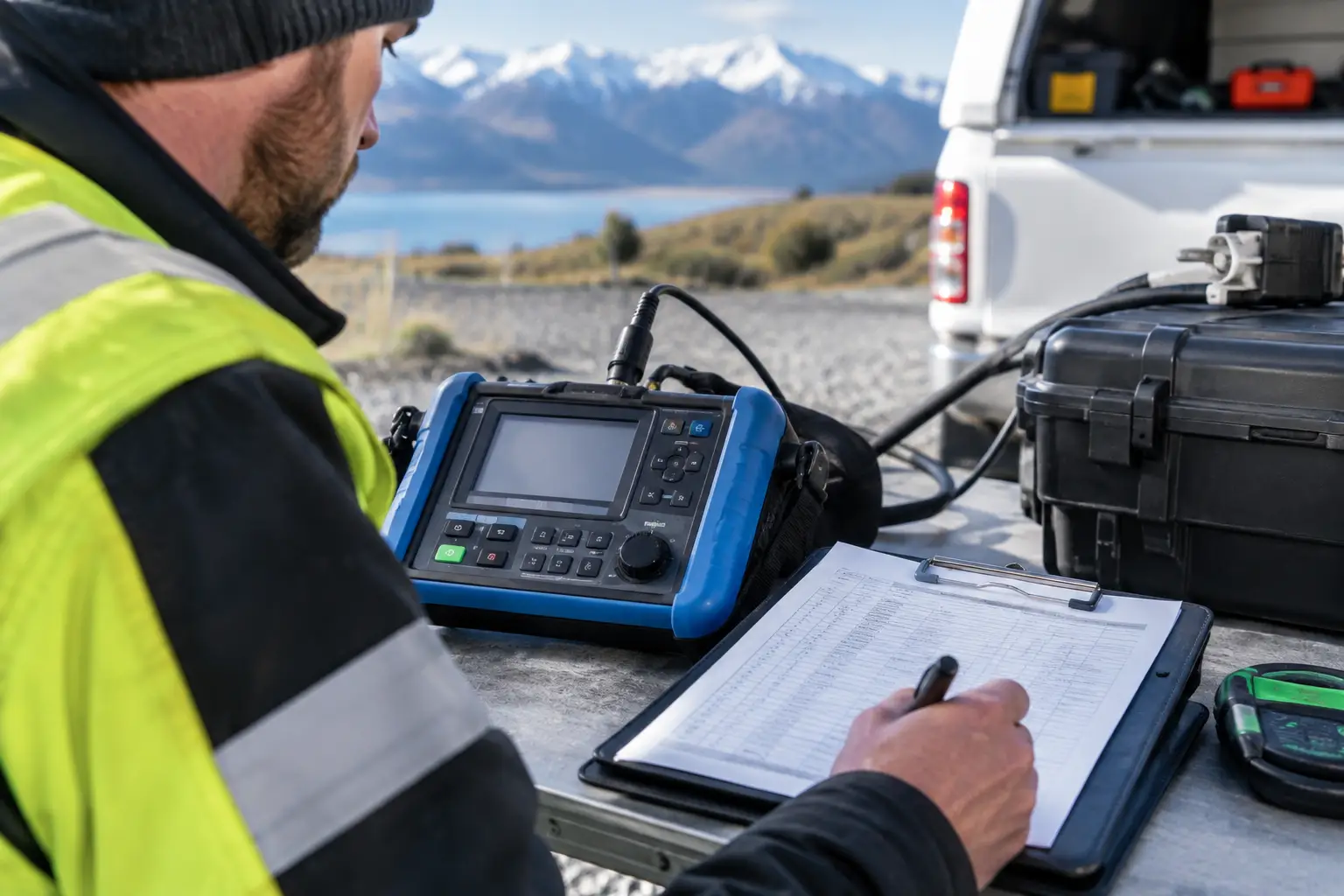
Visual checks are essential, but they cannot identify every electrical fault. Portable appliance testing uses suitable test equipment to assess safety characteristics that cannot be confirmed by sight alone. Depending on the equipment type, testing may include earth continuity, insulation resistance, polarity and leakage checks.
For New Zealand workplaces, AS/NZS 3760:2010 provides the recognised framework for in-service safety inspection and testing of electrical equipment. It helps businesses set inspection and testing arrangements that reflect the environment and how equipment is used. The standard is not a reason to apply one blanket date to every item. A clean, low-risk office printer does not face the same wear as a demolition-site lead or a workshop grinder.
A competent tester should assess the equipment type, its class, whether it is double insulated or earthed, and the conditions in which it operates. Three-phase equipment requires particular care and appropriate testing capability. This is where a qualified testing provider can save time and avoid uncertainty for busy site teams.
Set retesting intervals by risk, not habit
The most effective portable-tool audit considers exposure to damage. Equipment used outdoors, on construction projects, in manufacturing areas or in trade environments is generally subject to more frequent handling, dust, moisture, vibration and impact. These factors may justify shorter inspection and testing intervals.
Lower-risk office equipment may have longer intervals where it remains in a clean, protected environment and is not regularly moved. However, office items still need to be managed. A damaged kettle lead or overloaded multi-box can create a real risk in an otherwise low-risk workplace.
When setting your schedule, consider how often the item is moved, who uses it, whether it is exposed to weather or rough handling, and the consequences if it fails. Client requirements, insurance conditions and site rules may also set expectations. Document the basis for your intervals so they can be explained and reviewed as site conditions change.
Decide what happens to failed tools
An audit only improves safety when faults lead to clear action. If an item fails a visual inspection or electrical test, remove it from service immediately. Mark it clearly so it cannot be picked up and used by someone who has not seen the fault, then record the result in the register.
The next step depends on the equipment and the nature of the fault. It may be assessed for suitable repair by an appropriately qualified person, or it may need to be disposed of and replaced. Do not let failed equipment sit in a corner, in a ute or back in a tool cage without a clear status. Uncertain equipment has a habit of finding its way back into use when a crew is under pressure.
It is also worth recording recurring failures. If multiple leads are being damaged in the same area, the issue may be storage, vehicle transport, lead routing or site practices rather than the leads themselves. The audit can then lead to a practical change that prevents repeat faults.
Keep records that work on site
Good audit records should help people make decisions, not create paperwork for its own sake. At a minimum, retain the asset register, inspection and testing outcomes, test dates, next due dates, failed-item actions and any notes on unusual conditions or exclusions.
A clear report can be particularly valuable when a client, insurer or health and safety representative asks for evidence that equipment is managed. It also reduces disruption at the next scheduled test because missing equipment, new assets and previous failures are already visible.
For larger sites or businesses with equipment across several locations, assign someone to notify the testing provider about new purchases, disposals and equipment transferred between teams. A simple monthly update is often enough to prevent the register becoming inaccurate.
Include RCDs and temporary site equipment
Portable residual current devices, often used with leads and tools in higher-risk environments, need their own inspection and testing arrangements. They are a valuable additional control, but they do not replace the need to inspect and test the tool or lead connected to them.
Temporary site setups also deserve focused attention. Power boards, extension leads and portable distribution equipment are often moved, exposed to dust and subjected to heavy use. Audit these items separately if needed, particularly when a project is ramping up or changing stages.
Make audits part of normal site control
A formal audit is most useful when it sits alongside everyday care. Encourage workers to report damage immediately, keep leads off vehicle routes where possible and return tools to protected storage. Supervisors can reinforce this during pre-starts without turning the conversation into a technical lecture: if it looks damaged, feels unusual or has no current status, stop using it and report it.
Scheduled testing and tagging provides the independent check, asset records and reminders that keep this process on track. For South Island businesses managing mixed equipment across offices, workshops and active sites, Phase Test and Tag can help tailor the programme to the risk rather than applying a one-size-fits-all schedule.
The best time to deal with a worn lead or questionable tool is before the next shift starts. Keep your register current, act on faults straight away and make electrical compliance one less thing your team has to chase under pressure.