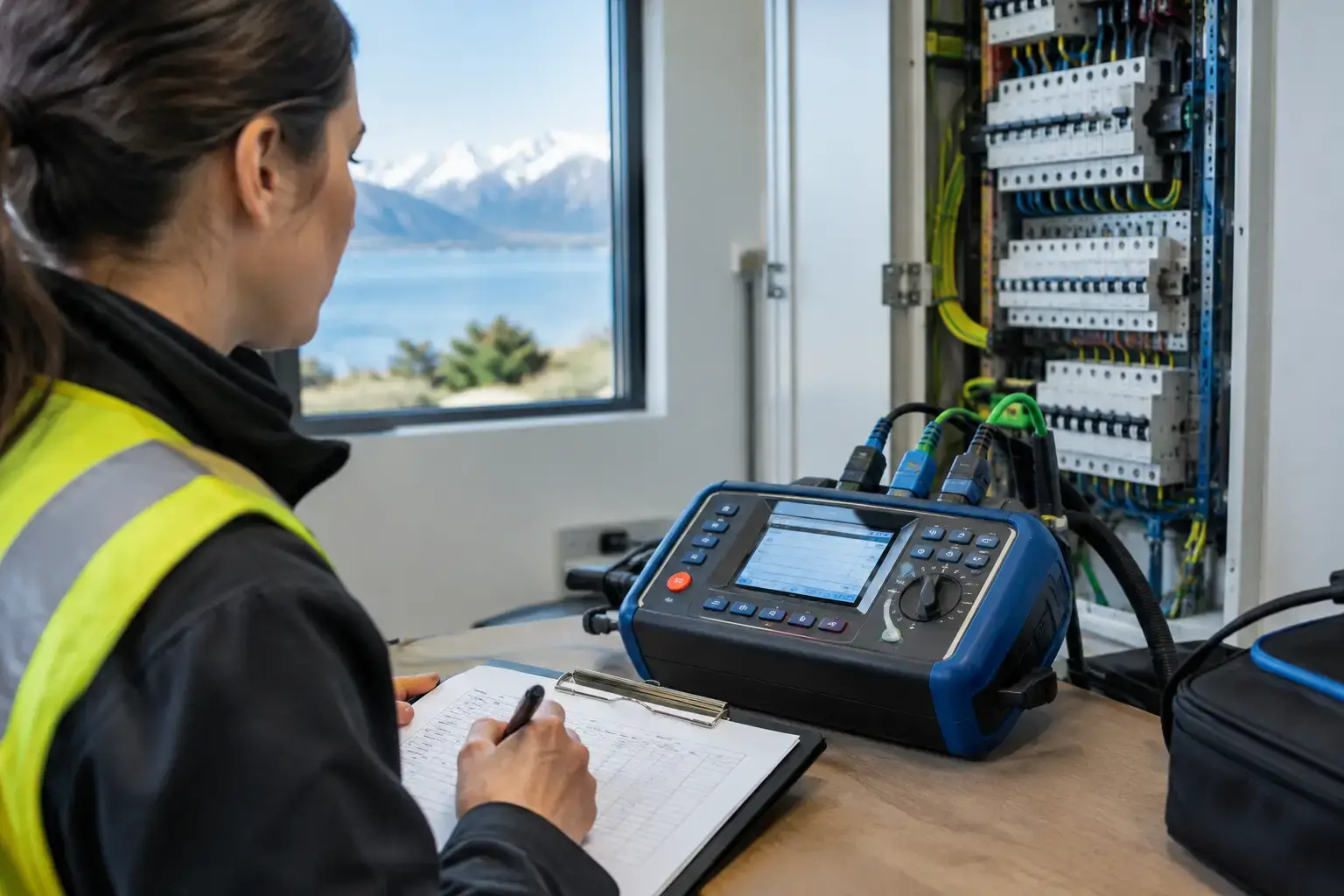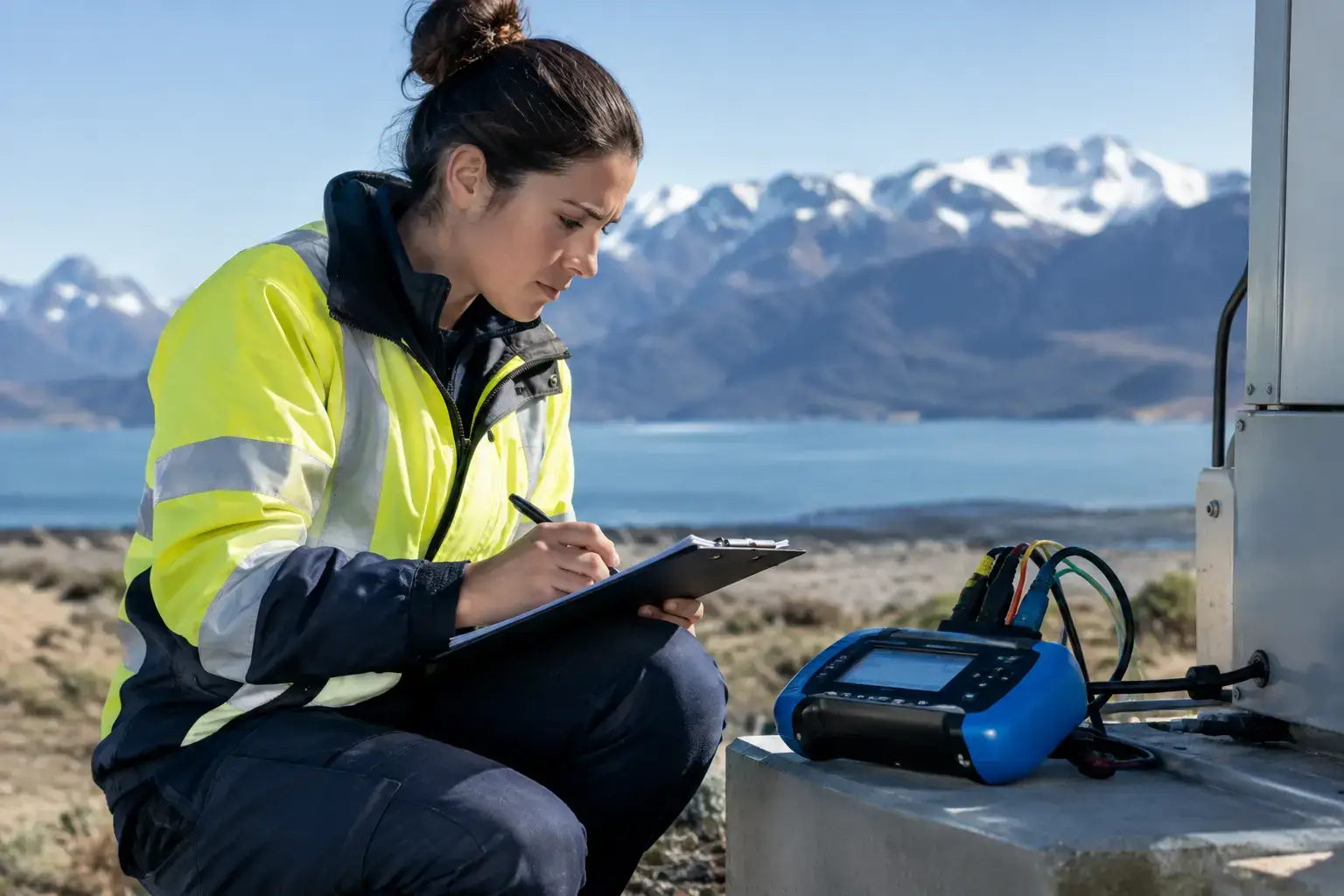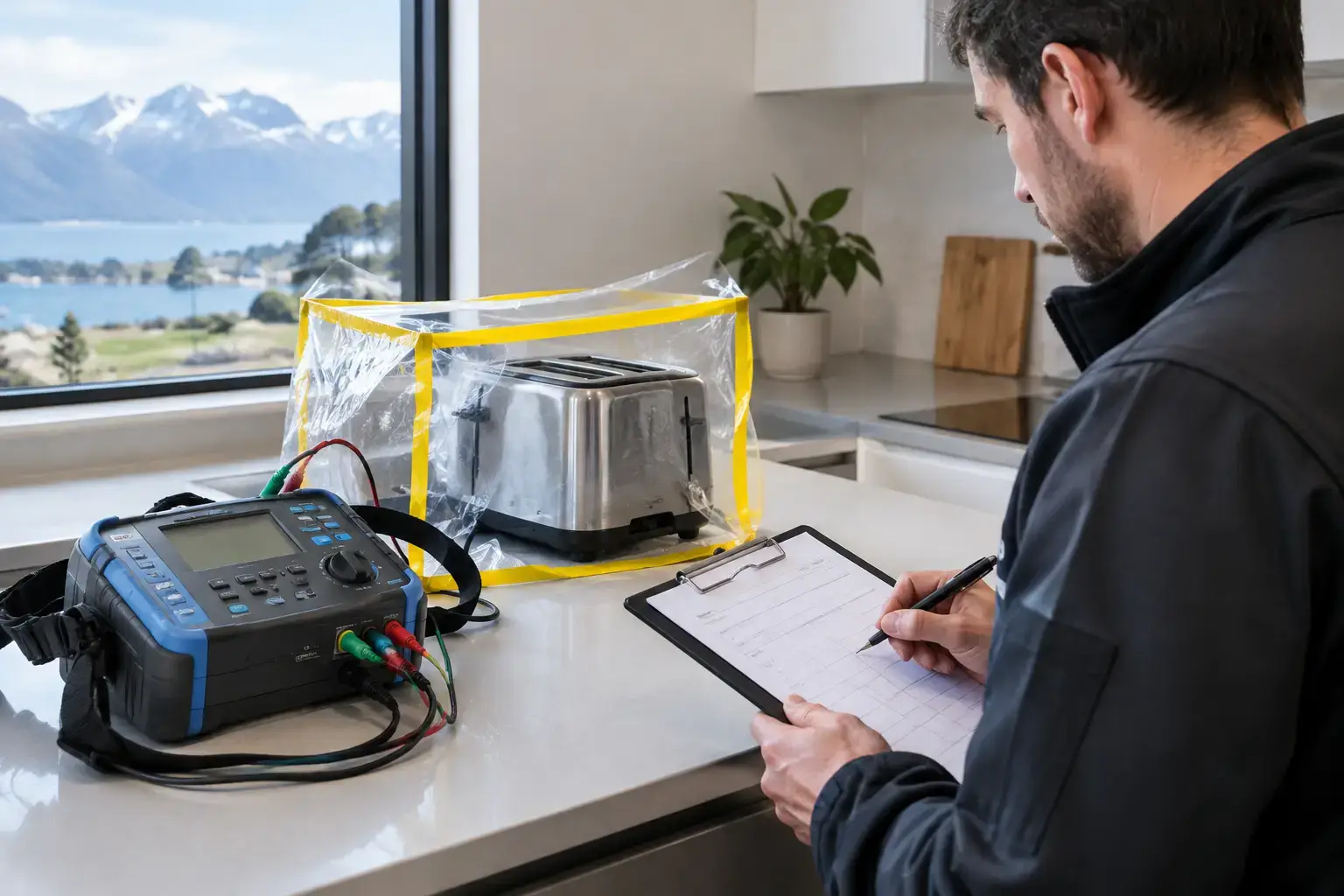
A damaged extension lead left near the tool bench can be picked up again within minutes. A kettle that trips the power may be moved to another kitchen. That is why knowing how to quarantine defective appliances is more than putting a note on an item. It is a practical process for stopping use, protecting people and ensuring a fault is properly managed before it creates an electrical shock, fire or downtime event.
For site managers, contractors and business owners, a clear quarantine process removes guesswork at the point where risk is highest: immediately after a defect is found.
What quarantine means in a workplace
Quarantining an appliance means taking it out of service so it cannot be used, plugged in, loaned out or accidentally returned to the work area. The item remains identifiable and traceable while a decision is made about its next step.
This applies to more than obviously damaged appliances. A portable appliance may need to be quarantined after failing a test and tag inspection, showing physical damage, behaving unusually, overheating, giving off an electrical smell, causing a protective device to operate, or getting wet or contaminated on site.
The aim is not to diagnose the fault on the spot. The priority is to prevent further exposure while the item is assessed through the appropriate workplace process. A cracked plug top, exposed conductor or damaged lead can be easy to see. Internal faults often are not, which is why an appliance that has tripped, sparked, smoked or delivered a tingling sensation should never be treated as safe because it looks intact.
Act straight away when a defect is identified
The safest response is immediate and uncomplicated: stop using the appliance, disconnect it from the supply if it is safe to do so, and keep it away from the work area. Do not continue using an item until the end of a shift just because it is needed for the job.
If there is heat, smoke, burning odour, visible arcing or a fire risk, keep people clear and follow the site’s emergency procedures. Do not handle equipment that presents an immediate hazard. The response needs to match the circumstances, and any incident or near miss should be reported under the business’s health and safety process.
For a straightforward defect, the person who finds it should notify their supervisor or nominated health and safety contact as soon as possible. Staff need permission to make that call without worrying that they are holding up production. A workplace culture that rewards early reporting prevents small faults becoming serious events.
Do not rely on a handwritten note alone
A note saying “broken” is easy to lose, ignore or misunderstand. A purpose-made out-of-service tag provides a clearer warning and should be securely attached to the appliance or lead. It should state that the item must not be used and record enough detail for the next person to understand why it was removed.
Depending on your site process, record the asset number, description, location, date, person who identified the issue and the observed defect. If the appliance has a prior test tag, leave the identification information available where practical. This makes it easier to reconcile the item with the asset register and avoid it quietly disappearing from the compliance record.
How to quarantine defective appliances properly
An effective quarantine process has three parts: make the item unusable, make its status unmistakable and move it to a controlled location.
First, unplug the equipment and remove any detachable lead or accessory where this can be done safely. Keep all related parts together. A damaged lead separated from its tool may otherwise be reused with another item, transferring the risk rather than removing it.
Second, attach an out-of-service or danger tag that is durable and clearly visible. A failed electrical test tag is not a repair instruction or a future testing reminder. It is a clear stop signal. Do not cover it with a new tag or assume the appliance can return to use after a visual tidy-up.
Third, place the item in a designated quarantine area such as a locked cupboard, cage or clearly marked storage point. The best location depends on the site. On a construction project it may be a controlled container or site office area; in an office, it may be a restricted facilities store. What matters is that staff cannot casually retrieve the appliance when they are short of equipment.
A quarantine area should not become a forgotten pile of faulty items. It needs an owner and a regular review. Items that remain there for weeks without a recorded decision create clutter, uncertainty and unnecessary administration.
Record the fault in your asset register
Testing and tagging is most useful when it feeds into a current equipment register. Once an item is quarantined, update its record promptly. Mark it as out of service and include the reason, the date, its current location and the action required.
Good records help answer practical questions: Was the appliance removed from the site? Is it awaiting assessment? Has it been disposed of? Was it cleared through the appropriate process before returning to use? They also provide evidence that the business acted when a hazard was identified.
Under AS/NZS 3760:2010, the inspection and testing of in-service electrical equipment is risk-based. The standard supports a system of regular inspection, testing, tagging and recordkeeping, rather than a one-off exercise. Your workplace environment influences the level of risk. Portable equipment used outdoors, on construction sites, in workshops or in hard-wearing industrial areas usually requires closer attention than equipment in a low-risk office environment.
A reliable asset register makes those different testing intervals manageable. It also helps prevent an out-of-service appliance being incorrectly treated as a missed test item and placed back into circulation.
Decide what happens next
Once equipment is quarantined, the business needs a clear disposition decision. In most cases, the item will be either assessed through an approved process, retained pending further investigation, or permanently removed from use and disposed of in line with site and environmental requirements.
Do not return an appliance to service simply because the obvious damage appears minor. A taped lead, loose plug, intermittent power issue or appliance that has previously overheated still needs proper assessment. Cosmetic fixes can hide the warning signs while leaving the underlying hazard in place.
There is a trade-off to manage. Holding every questionable item indefinitely can affect productivity, but rushing it back into service exposes workers and the business to a greater risk. Keeping suitable replacement leads, chargers and common portable appliances available reduces pressure to use equipment that has been taken out of service.
If an item has failed formal testing, retain the failed result in your documentation. A competent testing provider can help keep the status of equipment, test outcomes and due dates clear across a large or changing asset base.
Prevent quarantined equipment from returning by mistake
Most quarantine failures are process failures, not deliberate ones. Someone needs a grinder, fan or power board quickly, sees it sitting nearby and assumes it is available. That is why labels, physical separation and records must work together.
Make quarantine part of inductions and toolbox talks, particularly where staff share portable equipment across crews, vehicles and sites. Workers should know that they are expected to report damage immediately, that only authorised people can release an item from quarantine, and that removing an out-of-service tag is not acceptable.
Supervisors can reinforce the process with short routine checks. Review quarantine areas, compare the contents against the register and confirm that no failed equipment has returned to active storage. This is especially worthwhile after a busy project stage, a site move or the return of hired equipment.
Use testing results to improve the wider safety system
A defective appliance is also useful information. Repeated damage to the same type of extension lead may point to rough handling, poor storage, unsuitable equipment for the environment or a gap in staff awareness. Several overheating power boards in one area may indicate that equipment use needs closer review.
Portable appliance testing identifies many defects before they become incidents, while thermal imaging can assist with finding abnormal heat patterns in electrical equipment and connections as part of a preventative maintenance approach. Neither replaces day-to-day visual checks by the people using equipment. Staff are often the first to notice a crushed lead, damaged casing or change in how an appliance performs.
For Christchurch and South Island businesses managing varied sites, Phase Test and Tag can support this process with clear reporting, asset registers and scheduled reminders, helping compliance stay organised without creating extra administrative work.
A quarantined appliance should never be seen as an inconvenience sitting in storage. It is evidence that your safety system worked when it mattered. Make the next step just as clear as the first: stop use, isolate the item, record the fault and keep it out of service until its status is properly resolved.