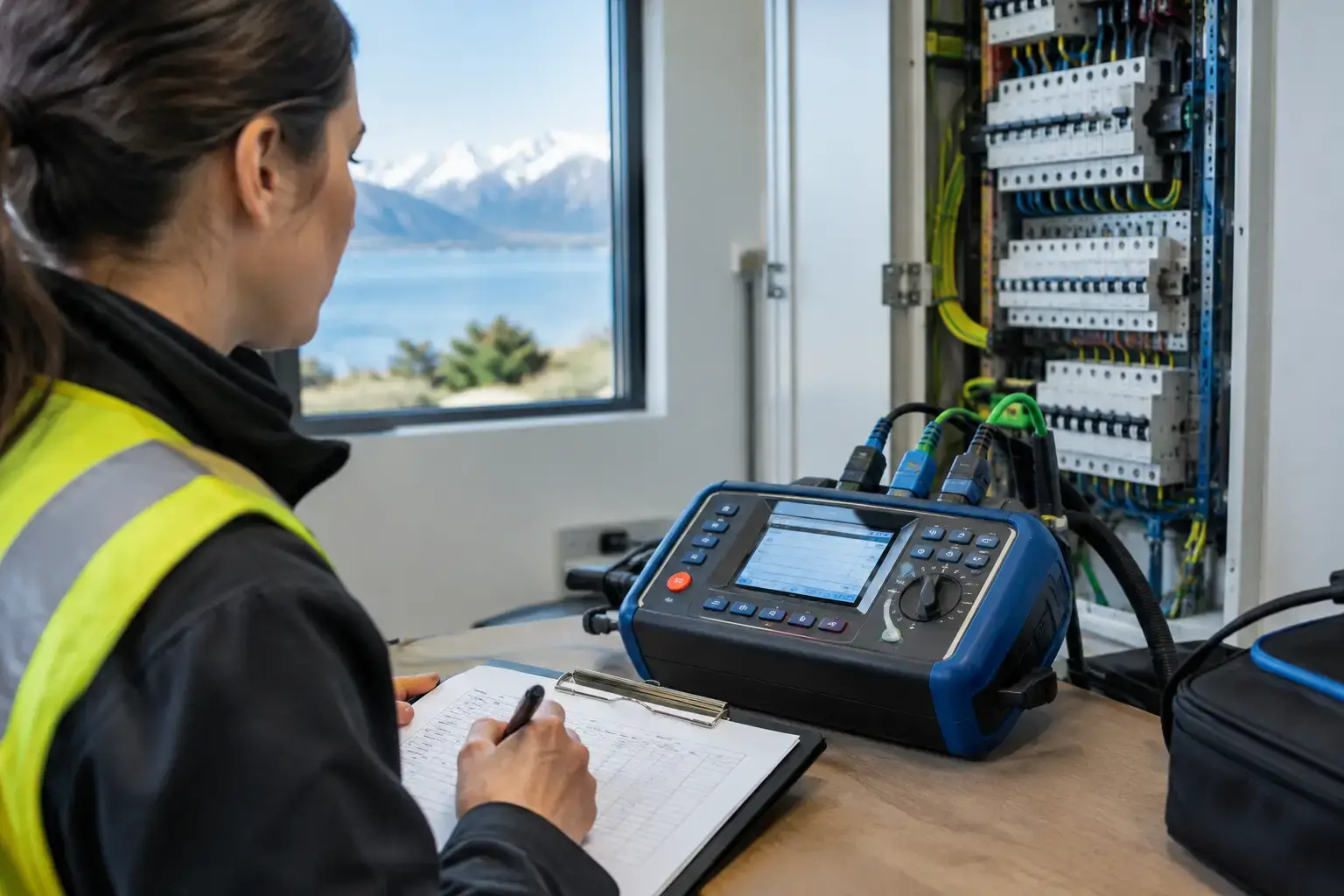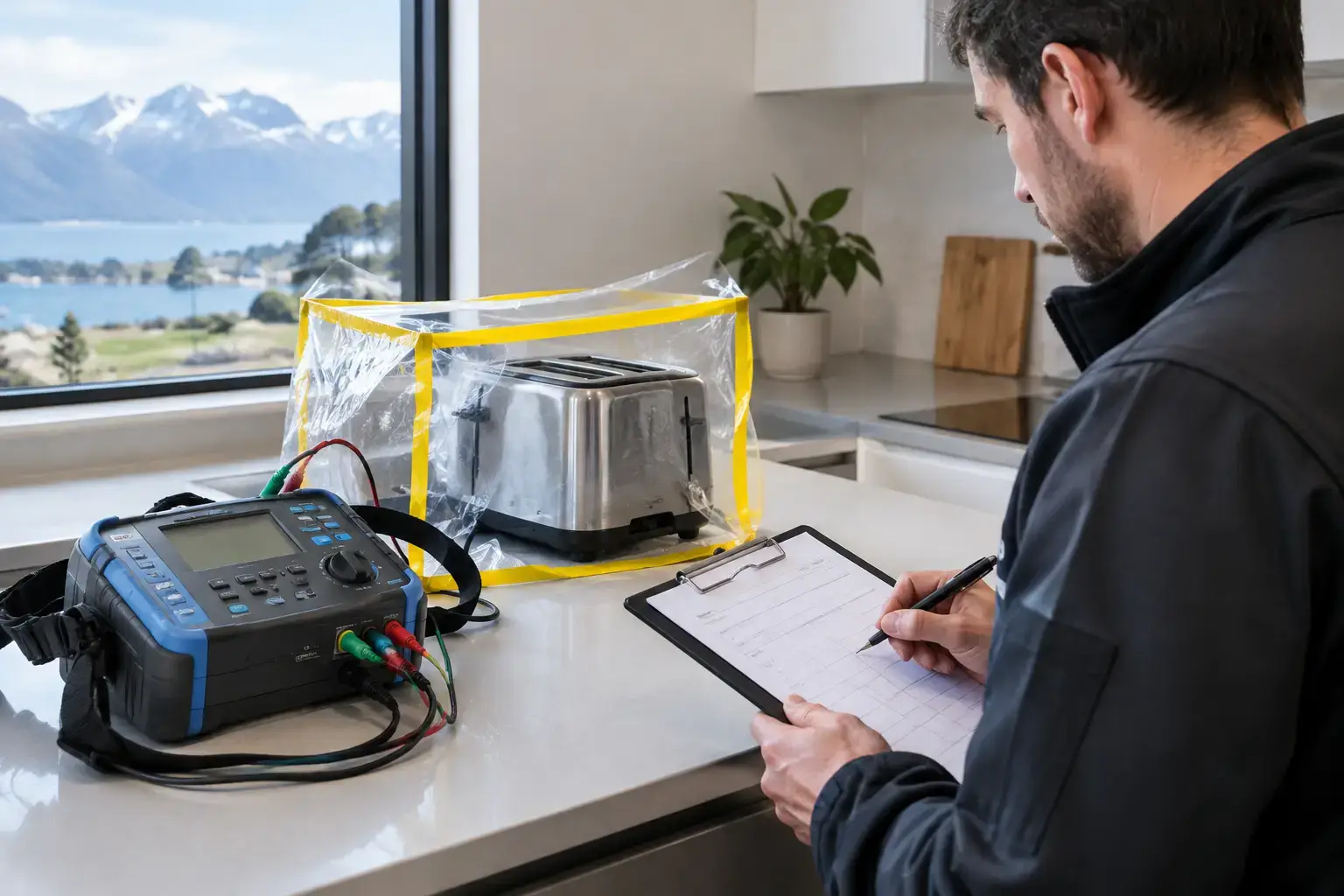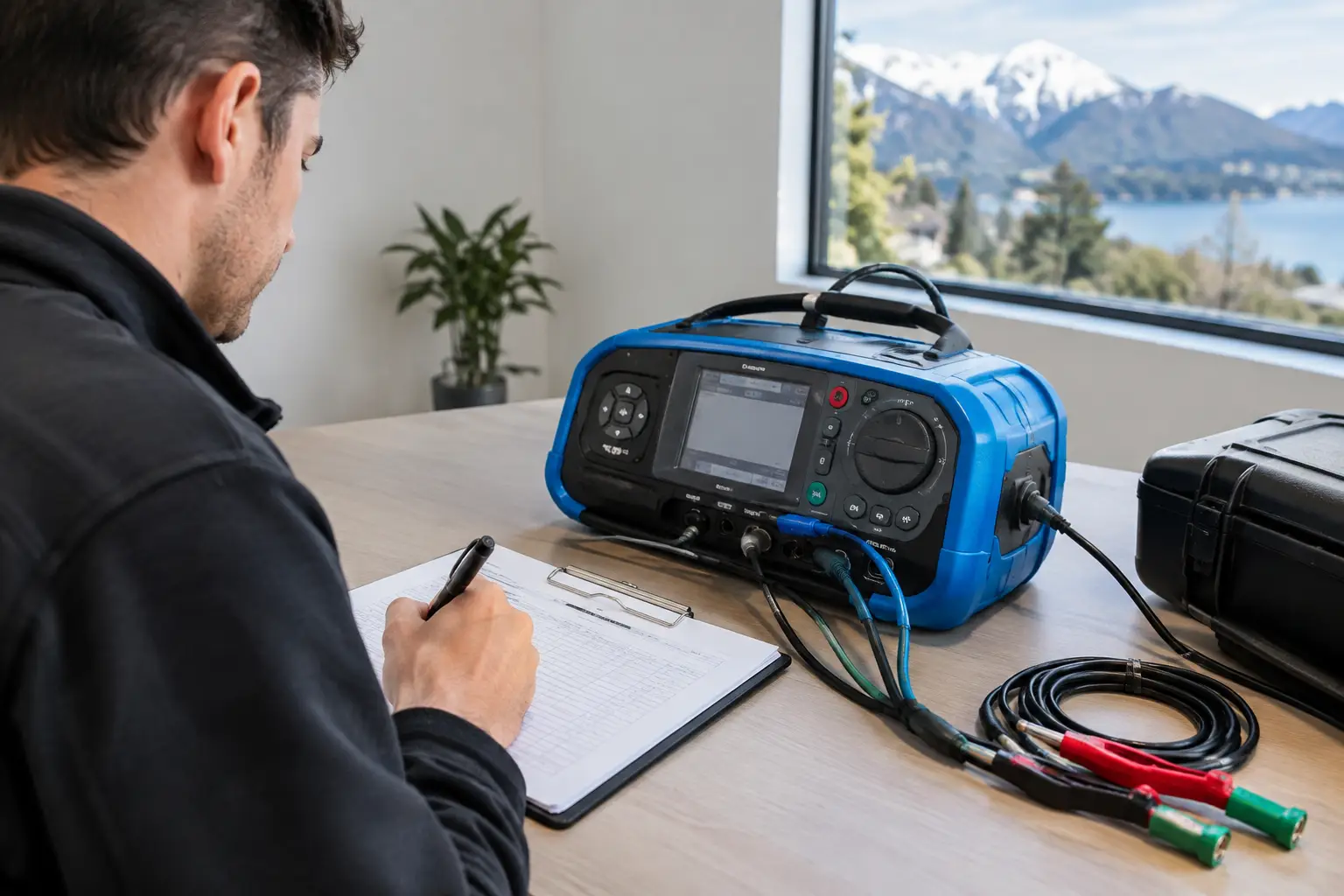
A failed tag on a lead, powerboard or tool is not a minor admin issue to deal with later. Failed test and tag equipment needs to be removed from use straight away, because the fault identified may expose workers to electric shock, burns or fire. A clear response protects people first, while also giving your business the records it needs to manage compliance and keep work moving.
For site managers and business owners, the practical challenge is balancing safety with continuity. A failed item can be inconvenient, particularly when it is part of a busy workshop, construction site or production process. But returning it to service before its condition has been properly addressed turns a manageable issue into an unnecessary risk.
Failed Test and Tag Equipment: The First Response
Portable appliance testing checks more than whether an item turns on. Depending on the equipment type and test method, it can identify issues such as damaged insulation, an earth continuity fault, incorrect polarity, a failed leakage test or visible damage to a plug, cord or casing. A visual inspection may also uncover crushed leads, exposed conductors, cracked housings, loose connections or signs of overheating.
When an item fails, it should be clearly identified as out of service and physically separated from usable equipment. The aim is to prevent an employee, contractor or visitor from picking it up later and assuming it is safe because it looks normal.
The immediate process should be straightforward:
- stop using the equipment and unplug it where safe to do so;
- attach or retain a clear failed tag so the status is visible;
- place it in a designated quarantine area, away from serviceable items;
- advise the relevant supervisor or equipment owner; and
- record the failure in the asset register, including the item ID, fault result and date.
Do not remove a failed label simply because the equipment is needed urgently. If a replacement is not readily available, the disruption should be managed by the supervisor rather than passed on to a worker who may feel pressure to use an unsafe item.
Understand What the Failure Tells You
Not every failure has the same cause or the same operational impact. A visibly damaged extension lead should be taken out of circulation immediately, while a failed insulation result on an appliance may not be obvious to the person using it. That is why both visual inspections and electrical testing matter.
A failure can also point to a wider issue. Repeated damage to leads in one area may indicate poor storage, traffic over cables, unsuitable routing or equipment being used in harsher conditions than expected. Several failed powerboards may indicate overloading, unsuitable products for the work environment or a lack of convenient access to safe power points.
Looking at the pattern is useful. One isolated failure may simply be wear and tear. A cluster of similar failures deserves a closer review of how equipment is selected, transported, stored and used. This is where a current asset register becomes more than a compliance document. It helps you identify recurring problems before they affect people or productivity.
Decide Whether the Item Can Return to Service
Failed equipment must not be returned to use based on a visual check alone. The appropriate next step depends on the type of fault, the age and value of the item, and whether it can be restored to a safe condition by a suitably competent provider.
For a low-cost extension lead or damaged powerboard, replacement is often the most practical option. For higher-value tools, appliances or three-phase equipment, an assessment may be commercially sensible. In either case, the item should only return to service after it has been checked, passed the required tests and received a new compliant tag.
Keep the failed tag or associated record until the item has been disposed of or formally cleared for use. This creates a traceable history if your business needs to show how the issue was managed. It also prevents an old item from finding its way back into a tool cage, store room or site vehicle without anyone realising its status.
Record Failures Properly, Not Just Passes
A test and tag register should show more than the equipment that passed. Recording failures is part of demonstrating that your business identified a risk and took practical action. It can also support internal health and safety reviews, client requirements, insurance discussions and site audits.
For each failed item, retain the equipment description, asset number, location or department, test date, reason for failure and the action taken. Where relevant, note whether the item was replaced, sent for assessment, disposed of or successfully retested before being returned to use.
Good documentation reduces the burden on busy managers. Rather than searching through paper tags or relying on memory, you have a clear record of each asset and its status. This is especially valuable when equipment moves between projects, crews, workshops and temporary sites.
AS/NZS 3760:2010 provides the framework for in-service safety inspection and testing of electrical equipment. The standard supports a risk-based approach, so your documentation should reflect the environment and the level of exposure your equipment faces. A clean office printer does not face the same conditions as a lead used daily around construction materials, mobile plant and outdoor work areas.
Prevent the Same Failures Happening Again
Removing failed equipment is the immediate priority. Preventing repeat failures is where businesses gain longer-term value from their testing programme. Start by reviewing the conditions around the failed item. Was it stored correctly? Was the cord pulled tight, run through doorways or exposed to moisture, heat, sharp edges or vehicle traffic? Was the equipment suitable for the task?
Simple controls can make a real difference. Use appropriate storage, keep leads off wet floors where possible, avoid running cords across accessways, and check equipment before use. Staff should know that a damaged plug, frayed lead, cracked casing or hot-smelling appliance is a reason to stop and report it, not something to work around.
Testing intervals also need to match the environment. Equipment used on construction, demolition and industrial sites generally faces greater risk and may need more frequent inspection and testing than equipment in a low-risk office setting. The right interval depends on the work being done, how equipment is handled, who uses it and the consequences of a failure.
A regular schedule with due-date reminders helps prevent expired tags becoming a last-minute issue. It also lets testing be planned around shutdowns, shift changes or quieter periods, reducing interruption to the site.
Use Thermal Imaging for Risks a Tag Cannot See
Test and tag inspections focus on portable electrical equipment. Thermal imaging adds another useful layer of preventative maintenance by identifying abnormal heat in electrical assets before it becomes an outage or safety incident. Heat can indicate loose connections, overloaded components, imbalance or deterioration that is not visible during a normal walk-through.
This service is particularly useful in commercial and industrial settings where unplanned downtime carries a real cost. Thermal imaging does not replace regular inspection and testing of portable equipment. Instead, it helps give managers a broader picture of electrical risk across the workplace.
Keep Safety Practical and Consistent
The best response to a failed item is one your team can follow without hesitation: take it out of use, identify it clearly, record the result and do not return it until it has passed the appropriate checks. That consistency protects workers and makes compliance far easier to manage.
For South Island businesses with varied equipment, locations or testing intervals, Phase Test and Tag can provide clear reporting, asset-register support and scheduled reminders so failed items and upcoming due dates do not become another issue for your team to chase.